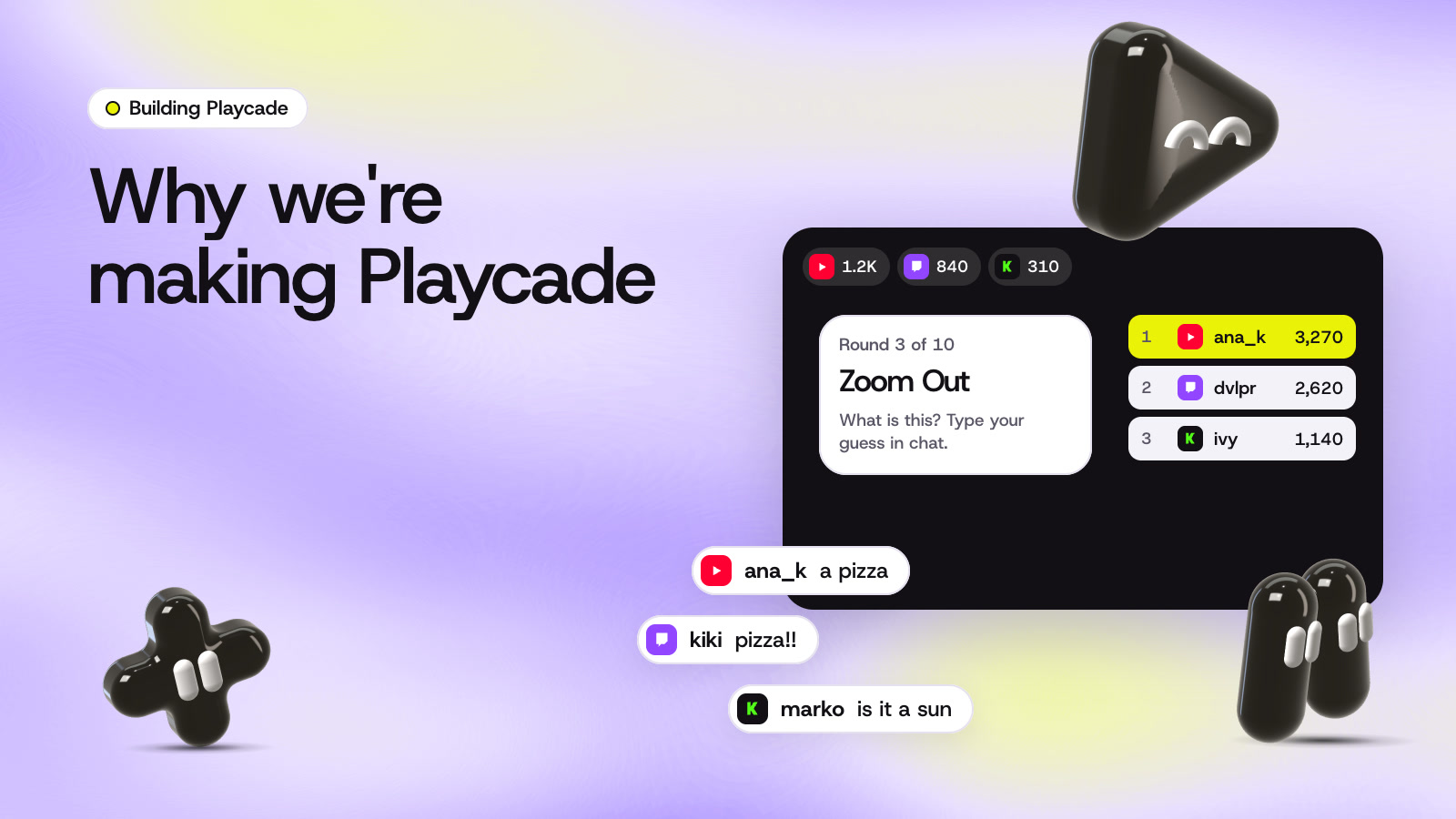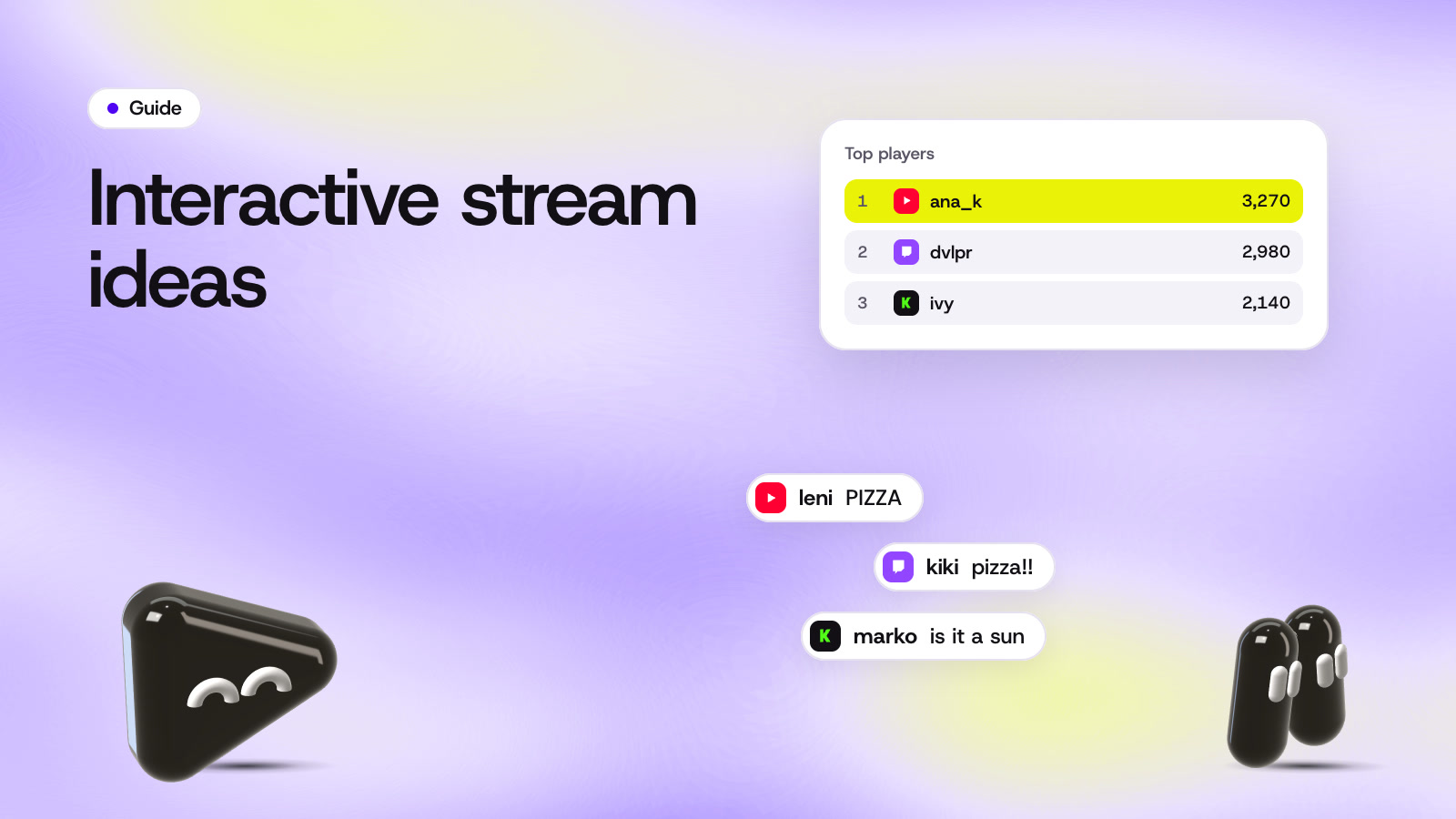






StreamArena works on a stream with five viewers because its games don't wait for a crowd. You can play against your own chat, a house player joins quiet rounds, guests play from their phones, and the daily puzzle puts your five viewers on a global leaderboard.
When we showed the first games to our own team, the first question was what happens when only three people are watching. Plenty of streams have a handful of regulars who show up, say hello and stay if there's a reason to, and we built for those streams first.
Why most stream games need a crowd
A lot of stream games are races or votes. A race with one runner has no winner, and a vote with two people in it is a coin toss. These games were made for big chats, and on a small stream they make the quiet more obvious.
Twitch's own tools don't help much either. Twitch's polls and predictions are only for monetized channels, so a new streamer can't use them at all.
The ability to create Polls is exclusive to monetized streamers.
So we set a rule for the StreamArena lineup. A game has to be fun with one to five players, and four features make that possible.
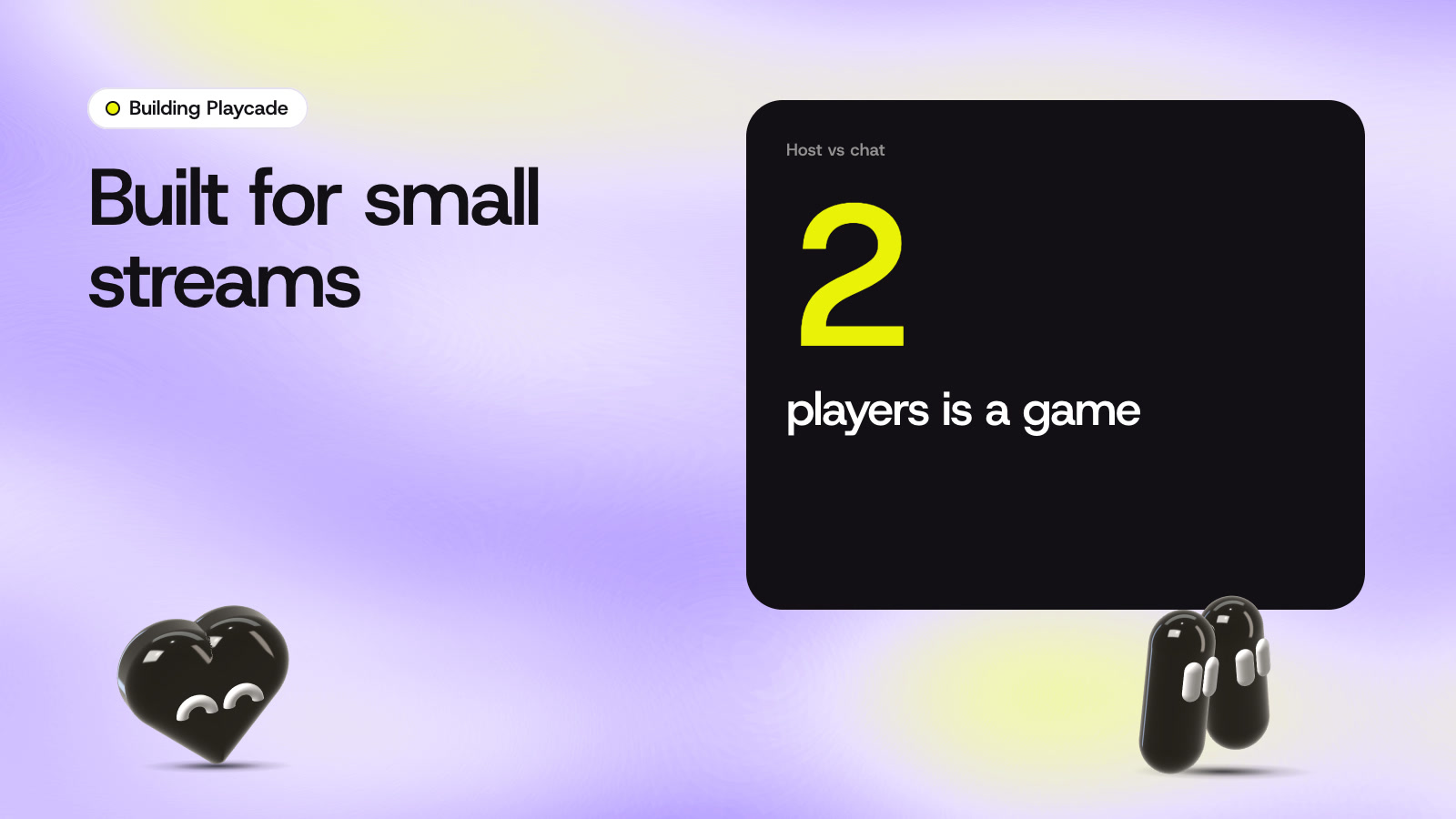
Host vs chat: two players is a game
In Chat vs Host, you answer a question in private and chat guesses what you said. "What's my favorite fruit?" "Which city would I move to?" One viewer and you is already a full round.

This format works better on a small stream than a big one. With five regulars, the host reads out all the guesses, a wrong answer turns into a joke, and the person who knows you best gets bragging rights for a week.
A house player for quiet rounds
Sometimes chat goes quiet. People are cooking, or watching in another tab, or just shy. A house player joins when that happens, so nobody plays against silence.
It answers like any other player and shows up on the scoreboard. A lone viewer has someone to beat, and a round never ends on an empty board.
One daily puzzle shared by all streams
The daily puzzle is one shared puzzle a day, the same on all the streams that play it, a bit like Wordle. Your chat solves it together, and your score lands on a global leaderboard.

On a small stream, that makes five viewers a team in a bigger game. Climbing from 48th to 30th is a real reason to come back tomorrow.
Guests count as players
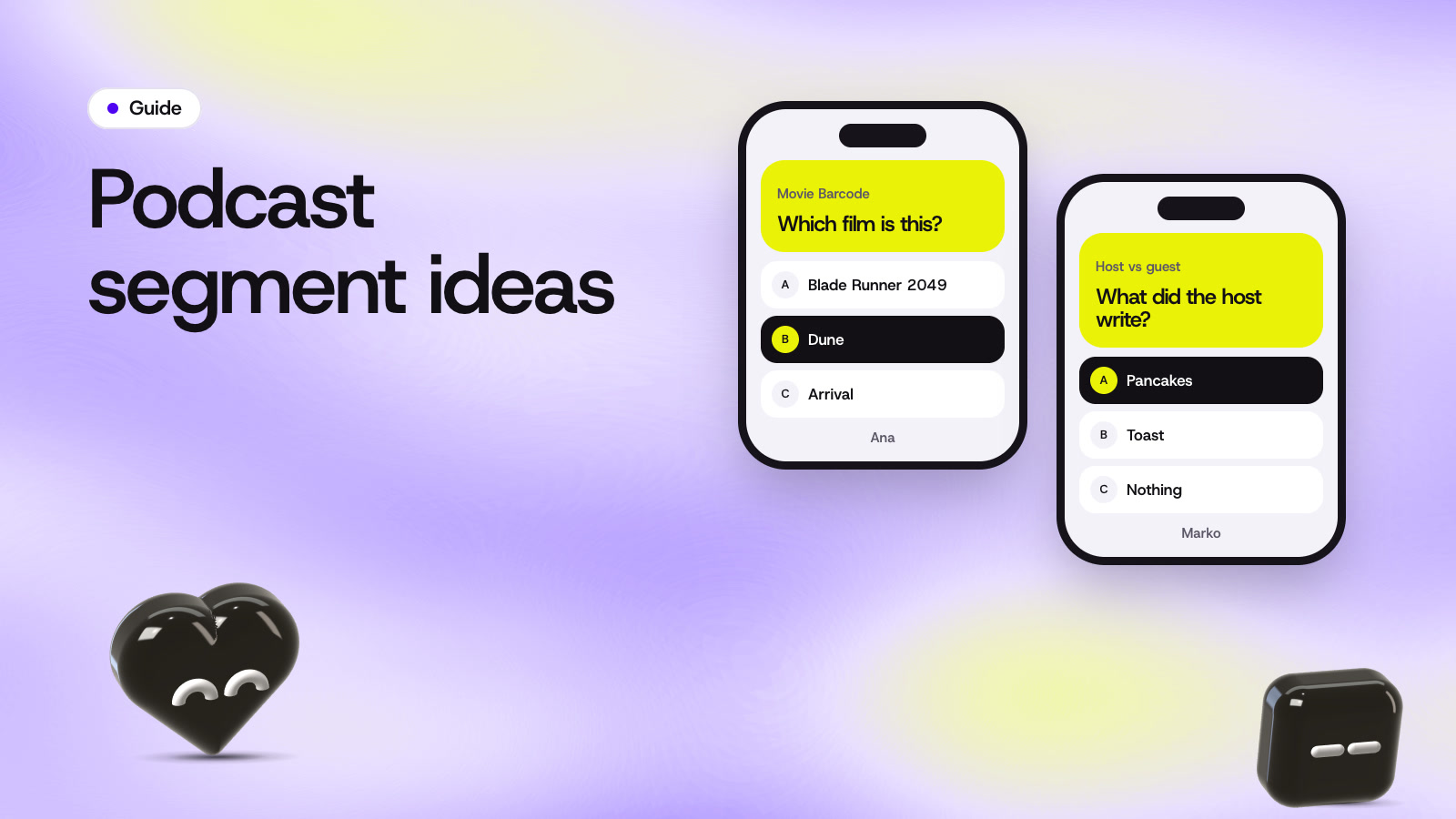
Guests on camera play from their phones. They scan a code, pick a name and answer privately in the browser, and nobody needs an account. A podcast with two guests and no live chat is a complete game, and so is a cohost sitting next to you. The guests section shows how it looks.
Secret answers matter more on a small show. With three players, a reveal where all three picked different answers is the best moment of the segment.
How we'll know it works
We'll judge this on real streams, and small ones first. These are the numbers we're watching:
- The share of people active in chat who answer at least once.
- How many rounds a stream plays, and whether the host starts a second game.
- Whether hosts come back for another stream within a week.
- Whether streams with fewer than ten viewers finish a game.
We'll share what we learn here on the blog, including the parts that don't work. If a game only shines with fifty people in chat, it gets the right tag in the lineup or it comes out.
The small streams part of our homepage shows all four features, and the how it works steps take about a minute. For more game ideas sorted by chat size, read our interactive stream ideas, or see the games to play with your viewers page.
Questions
Which StreamArena games work with one viewer?
Look for the "Great with 1 to 5" tag in the lineup. Chat vs Host and Zoom Out both work with one viewer, and the daily puzzle works with any chat.
What is the house player?
A player that joins when chat goes quiet, so a round never runs against silence. It shows up on the scoreboard like anyone else.
Can I play with guests and no chat at all?
Yes. Guests scan a code and answer on their phones, so a podcast with two guests and no live chat is a full game.
Sources
Checked on October 31, 2026. Platform features change, so open the page before you rely on a detail.